When “Basic” Water Purification Is No Longer Enough
For many years, conventional water purifiers have dominated the global market.
They improve taste, reduce chlorine, and offer a basic level of safety—often considered “good enough.”
However, as usage scenarios evolve, more users are realizing that filtration alone does not equal a complete hydration solution.
This shift has driven growing interest in countertop RO water purifiers, particularly models that integrate both cooling and heating functions.
Upgrade #1 | From Basic Filtration to RO-Level Water Purification
Conventional water purifiers typically rely on activated carbon or basic composite filters.
While effective at improving taste and reducing odors, their ability to remove dissolved contaminants is limited.
A countertop RO system, by contrast, uses an RO membrane as its core filtration component, supported by multi-stage pre- and post-filtration to achieve deeper purification.
Upgrade #2 | From Taste Improvement to Comprehensive Contaminant Reduction
In an RO-based system, filtration goes beyond taste enhancement and focuses on measurable water quality outcomes.
With a five-stage structure—pre-PP filter, pre-carbon filter, RO membrane, post-carbon filter, and post-PP filter—the countertop water dispenser system effectively reduces total dissolved solids (TDS).
This configuration also targets a wide range of common contaminants, including PFOS, PFBS, chlorine, salts, sediments, lead, and odor-causing substances.
Upgrade #3 | From Single-Temperature Output to Full Hot and Cold Control
Most conventional purifiers dispense water at ambient temperature, requiring external appliances for heating or cooling.
This fragmented approach adds extra steps and reduces efficiency.
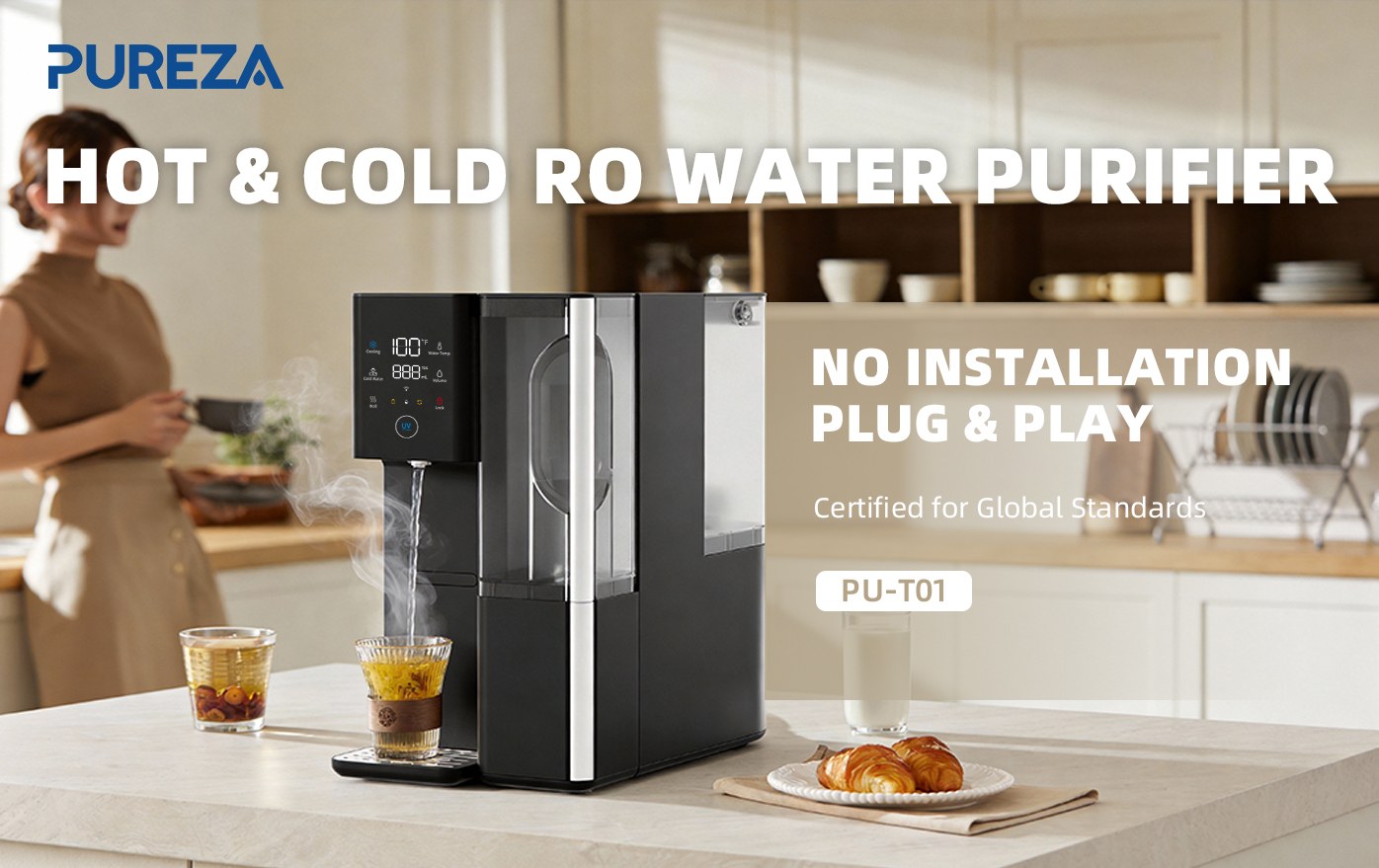
A countertop hot and cold RO system integrates both cooling and heating modules, offering six temperature levels—from chilled water to boiling output—supporting diverse daily use cases.
Upgrade #4 | From Manual Dispensing to Preset Volume Control
With conventional purifiers, dispensing is entirely manual, making volume control inconsistent and prone to spillage.
An upgraded countertop water dispenser offers four preset dispensing volumes—150 ml, 300 ml, 500 ml, and 999 ml—improving consistency and usability, especially in shared environments.
Upgrade #5 | From High Waste Ratios to Improved Water Efficiency
This countertop RO system addresses a common concern associated with traditional RO technology by achieving a 3:1 pure-to-drain ratio, reducing water waste while maintaining filtration performance.
Upgrade #6 | From Fixed Installation to Countertop Flexibility
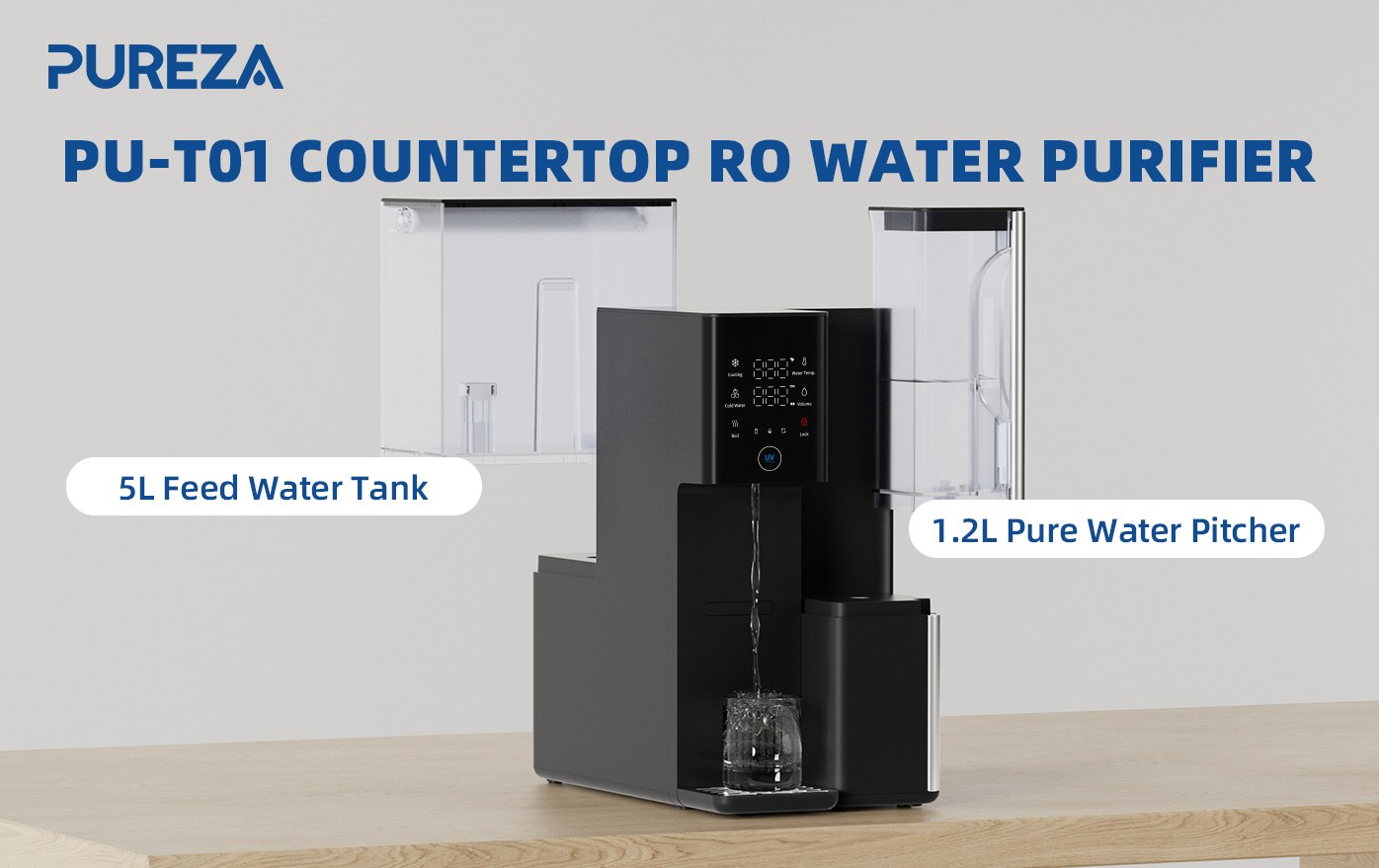
Unlike under-sink systems that require plumbing modifications, the countertop RO water purifier uses a 5-liter feed water tank and a 1.2-liter pure water pitcher, enabling plug-and-play operation across diverse environments.
Upgrade #7 | From Frequent Maintenance to Extended Filter Life
Many basic purifiers require frequent filter replacements.
This countertop RO water dispenser is designed for long-term stability, with a recommended filter replacement interval of approximately 18 months, reducing maintenance demands while maintaining performance.
Upgrade #8 | From Regional Products to Globally Compliant Systems
For brands targeting international markets, compliance is essential.
With CE, CB, FCC, and FDA certifications, this system meets key regulatory requirements across regions, supporting global distribution and OEM partnerships.
The Upgrade Is a Complete Hydration System
Compared to conventional water purifiers, a countertop hot and cold RO system represents a multi-dimensional upgrade—addressing water quality, temperature control, efficiency, installation flexibility, and long-term usability as a complete hydration solution.



Ningbo Pureza Technology
Teléfono : +86 19880967823
Whatsapp : +86 19880967823
Correo electrónico : Ajay@pureza.com.cn